Poetry and Prose
“Gorgeous writing! So much of it is lyrical and funny and moving.” –Lanford Wilson, Winner of the Pulitzer Prize
“In Escape from the Fat Farm, McIntosh has an uncanny feel for when to leave off—his propensity for the well timed, reticent moment suggests something essential that’s especially salient in his portraits. His work is transformative while it’s as much, or more, imagined as transcriptive. Something of great value has to do with language and, by extension, how a nascent writer emerges over time, whose literary propensity renders the past as necessity… McIntosh’s waggish, fracturous moments sketch primal scenes in which one or another ‘harmless impersonator’ steps forth from a menagerie of unreliable narrators. The ethereal memories of Sandy McIntosh recover his younger years in which, too often, he’s learned to finesse the implacable forces trying to keep him in a box. In his early adulthood he’ll come to learn how peculiar people, some like him escapees, can be. His memories are subtly painful, raucously hilarious.” – Burt Kimmelman, from the Introduction
LOOK INSIDE THE BOOK HERE!
Exclusive: Preview a short memoir from the new book.
Best Selling Title in the Marsh Hawk Press “Chapter One” Series

Publishers Weekly Selected Review
“Plan B: A Poet’s Survivors Manual is a wonderful book, an important book, a book aspiring writers of fiction and poetry should read.” –David Lehman, Editor, The Oxford Book of American Poetry. Series Editor, The Best American Poetry
Plan B: A Poet’s Survivors Manual by Sandy McIntosh
Teaching positions at universities have often been the preferred destinations of American poets, but with the overwhelming success of MFA programs, tens of thousands of their graduates now must vie for a limited number of part-time and full-time positions. This means many will have to look elsewhere for work. In other words, they will need to devise and follow a Plan B. Award-winning poet, Sandy McIntosh had to come up with his own Plan B when his first part-time teaching position was suddenly eliminated. Far from being an unsurmountable obstacle, this launched him on a life-long career in projects that used his writing abilities. In Plan B: A Poet’s Survivors Manual, he explains how—far from corrupting his poetry— working in different writing genres enhanced his personal creative work while providing a secure financial basis upon which to continue building his craft.
Look Inside the Book
Behind the Scenes Interview. How a Poet Made a Living By … Writing!

Interviews with Joseph Heller, Phillip Lopate. David Ignatow, H.R. Hays, Martin Tucker, and others.
Sandy McIntosh: Writing Influences: “Why Should I Write Another Book?” March 2021
“And why should I want to write another book?” Joseph Heller, testy, asked. “I moved to the Hamptons so that I could be near the water, walk on the beach at night. I study the waves at high tide. I listen to music. I don’t have a need or reason to write.” [Read more here]
 N.Y. Daily News August 14, 2020
The year Trump went astray: A former New York Military Academy classmate on the emergence of a self-promoter
New on YouTube:
Susan Bailey Reads “Ernesta,” from Obsessional by Sandy McIntosh
“Gorgeous writing. Wonderfully lyrical and funny and moving.”—Lanford Wilson, winner of the Pultizer Prize
The story of a 19th century Spanish pianist who consorts with the major musicians of her time, and who will do whatever she has to do in order to succeed, including murder.
___________________________________________________

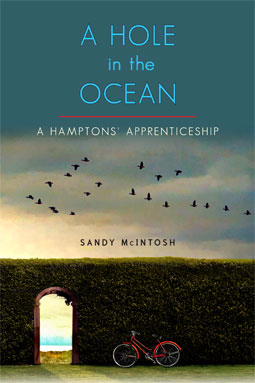
Lesser Lights: More Tales from a Hamptons’ Apprenticeship
a memoir
“Hilarious…. Lesser Lights is a charming memoir written from that place where art and fact commingle to produce a swift, rollicking read.” The East Hampton Star
Available Now from AMAZON and SPD BOOKS
“Lesser Lights is very funny. There’s also an exquisitely fine sense of a special place and time.”—Phillip Lopate
I love time travel stories—and this book offers a trip back to a time and place that seems almost like science-fiction today. Wonderful characters, great surprises, and a sly sense of humor that kept me eagerly turning the pages.” —R.L. Stine, author Goosebumps and Fear Street
Read the Chapter One Featured excerpts: “Two Bookstores and Two Capote Intrusions”
New: Visit the Readings & Book Signings Calendar for 2019 Winter and Spring Appearances: Portland, Oregon, Sacramento and Berkeley, California, New York City, New York, Rockville Centre, New York and East Hampton, New York
 In this second collection of memoirs, award-winning author Sandy McIntosh, continues his coming of age story set in the early 1970’s in Long Island’s famous Hamptons arts colony. Included are tales of wild adventures in filmmaking with Norman Mailer and Ilya Bolotowsky; the communist influence on the work of the writers and painters; as well as encounters with Truman Capote, Jean Stafford, P. G. Wodehouse, and others. Here also are intimate portraits of a young poet named Robert, son of a 1940’s minor movie star, which are at times hilarious, brooding and touching—yet always engaging, revealing and true.